Relationship patterns · a plain-language guide

Relationship Patterns: What You Can Notice About How You Connect

A relationship pattern is a recurring preference, reaction, expectation, or way of connecting that you can notice across situations and relationships. Patterns show up in what creates closeness, how you handle difficult conversations, what kind of affection you notice, how much independence feels comfortable, and what creates attraction. They're worth noticing because they help you put words to what feels right to you, and to ask for it more clearly. A pattern is not a diagnosis, and it isn't a fixed personality label you carry for life. AmorKind doesn't use patterns to predict a future partner, score a relationship, or decide who you're meant to be with.

  • Attraction
  • Closeness
  • Communication
  • Affection
  • Lifestyle
  • Chemistry
Explore your love style

A two-minute, private reflection on how you tend to connect.

Definition

What is a relationship pattern?

A relationship pattern is a recurring way you prefer to connect, react, or expect things to go in a relationship. It can show up in how you feel close to someone, how you approach a hard conversation, what kind of affection you notice, how much independence feels right, and what draws you to a person. Patterns come from habit, experience, and preference, and they usually show up consistently enough that you can name them.

An adult moving through everyday moments of conversation, reflection, quiet closeness, and independent time.

The six areas

Common areas where relationship patterns show up

Patterns rarely announce themselves as a single dramatic event. They show up in everyday choices. Here are six areas where people commonly notice their own.

Attraction

What draws you in can be a pattern too. Some people notice they're consistently attracted to confidence and directness; others to warmth, humor, or quiet competence. Attraction patterns are preferences, not a verdict about who you should be with.

Closeness

One person feels closest during quiet, unhurried time together. Another feels it through active conversation and shared ideas. Both are real ways of being close; they just look different.

Communication

When something matters, some people want to talk it through right away. Others prefer to sort out their thoughts first. That's a difference in timing and processing, not a sign that one approach is better.

Affection

Care shows up in many forms: a small everyday gesture, a kept promise, a direct word of reassurance. What feels like affection to one person can be easy for another to miss.

Lifestyle and pace

Some relationships feel best with steady routines and frequent contact. Others thrive with more independence between moments of closeness. The right pace depends on the people involved.

Chemistry and connection

Chemistry can feel like an easy, natural flow, or like a slower build that deepens with trust. How you experience it, and what makes connection feel unforced rather than strained, is itself a pattern worth noticing.

A useful distinction

Relationship patterns are not the same as personality types

A pattern is something you can notice and describe, not an identity you carry. Personality-type systems sort people into fixed boxes with labels meant to summarize who they are. A relationship pattern is narrower: it describes how you tend to connect in a particular area, and it can look different in a different context or at a different stage of life.

Naming a pattern doesn't mean you're stuck with it, and it doesn't mean you fit a type. It just gives you language for something you've already been doing.

A separate framework

Relationship patterns vs. attachment style

Attachment theory is a specific concept in psychology. It describes how early caregiving experiences can shape expectations in adult relationships, and researchers study it with standardized measures.

This page doesn't use relationship patterns as a stand-in for attachment theory. Patterns here are plain, descriptive language for everyday preferences and reactions. Nothing on this page diagnoses an attachment style, tells you that you're anxious or avoidant, or replaces a professional assessment.

If you want to understand attachment theory properly, read about it from established psychology sources.

Patterns over time

Can relationship patterns change?

Yes. Patterns can shift with experience, context, life stage, a different relationship, or clearer preferences. Someone who wanted constant closeness in their twenties might want more independence later, or the reverse.

A pattern is a snapshot of how you tend to show up, not a promise about how you always will. Noticing a pattern doesn't mean you're stuck with it. It also doesn't guarantee a change on any schedule; no one here is promising a particular outcome.

A light reflection

How to notice your own patterns

You don't need a questionnaire for this. These six questions are reflection prompts, not a test. There are no right answers, and nothing is scored or collected.

  1. When do I feel closest to someone?
  2. What makes a difficult conversation feel manageable?
  3. What kind of affection do I notice most?
  4. How much shared time feels natural to me?
  5. What creates attraction for me?
  6. What makes connection feel easy rather than forced?

Sit with one question at a time. If a pattern appears across several relationships, that's often where the insight is.

From noticing to recording

Record three experiences, then read what repeats

Pick three moments — from one relationship or several — where something felt off, good, or familiar. For each one, write what happened, what you needed, and what you want to try next time. Describe only what you could observe or quote: what was said, done, or repeated. Not what it means about anyone's personality, and not an attachment type — this worksheet collects observations, not conclusions.

What happened (facts only)What I neededWhat I want to try next time
Example

Plans changed the same morning twice this month; both times I said it was fine, then felt irritable for days.

More notice before changes, or a say in the new plan.

Say it early: “I can flex if we decide together — same-morning changes wear me down.”

Experience 1
Experience 2
Experience 3

This table is plain HTML — you can print the page and fill it by hand, and nothing you type is uploaded anywhere. The copy button only assembles what is in the fields on this page.

Reading the three rows side by side, look for the observable repeat: the same timing, the same phrasing, the same missed need. That is a pattern you can describe out loud — no label required.

After you record an experience

Write two explanations, then pick what to observe next time

Take one experience from your record above — the stinging one works best. The first explanation that arrives is usually a verdict (“they don't care”). Before you keep it, write at least one alternative explanation that fits the same observed facts. Then note the information you could actually gather next time to tell the two apart. Neither explanation has to be right; the goal is to hold two possibilities until there is more to observe.

The experience (short version)

Copy the facts only from your record: what happened, when, no interpretation.

Explanation A — the first, most stinging reading

Say it plainly, then leave it here; writing it down is not agreeing with it.

Explanation B — an alternative that fits the same facts

At least one reading that does not assign a motive — busy, unaware, distracted, overloaded.

What I could observe next time

Concrete information that would help you tell A from B: what you could ask, watch, or notice.

Plain HTML, no upload: type here, or print the page and write by hand. The copy button only assembles what is on this page.

Filled example (example — for format only, not a real case)

The experience: I texted Saturday morning; no reply came until Sunday night.

Explanation A: he doesn't care about spending time with me.

Explanation B: he was with family all day and didn't register that I was waiting on a reply.

What I could observe next time: what actually fills his Saturdays; whether he mentions the late reply at all; how he responds when I say plainly that I wait on replies.

Two explanations keep the record honest. The first reading feels like certainty; the second one is what makes the next observation worth gathering.

What patterns are not

Patterns are information, not verdicts

A relationship pattern is a piece of self-knowledge. It is not a judgment about you or about any relationship. Specifically, a pattern is not:

  • A compatibility score. Two people can have different preferences and still be a good match. Nobody here is calculating a number.
  • A relationship verdict. Noticing a pattern doesn't tell you whether a relationship is healthy or doomed.
  • A soulmate prediction. A pattern describes you, not a future person.
  • A clinical diagnosis. Observation is not assessment. If you're concerned about your mental health, talk to a qualified professional.
  • A destiny. Preferences are not fate. They can change, and they don't decide who you'll love.

The AmorKind approach

How AmorKind explores patterns

AmorKind is a private, local-first visual relationship self-discovery app. Instead of answering questions, you make small visual choices about what feels right to you. Those choices influence your Connection Pattern, which describes how you tend to approach attraction, closeness, communication, affection, lifestyle, and chemistry.

Then you choose a Visual Muse, and the app unfolds your Love World: coordinated visual discoveries, daily reveals, and Visual Journeys that let you keep looking at the same areas from new angles.

A Visual Muse is a pre-generated illustration identity you choose to represent your Love World. It is not a predicted real person. It isn't generated from your answers as a soulmate face, it doesn't change your relationship profile, and it doesn't imply destiny or a future identity.

This page is reflection, not diagnosis, and the same boundary holds in the app.

Go deeper

Explore relationship patterns

Love Style Test

A short, private reflection on how you tend to feel close, communicate, show care, and manage space. Four choices, no score, no diagnosis.

Take the love style reflection

What Do I Want in a Relationship?

Patterns repeat more loudly when you have not named what you actually want. This guide helps you separate baselines, preferences, and bonuses — the same three levels your patterns tend to violate or confirm.

Clarify what you want

More guides on attraction, closeness, communication, affection, lifestyle, and chemistry are in the works.

FAQ

Questions, answered plainly

What are relationship patterns?

Relationship patterns are recurring preferences, reactions, expectations, or ways of connecting that you can notice across situations and relationships. They might show up in what creates closeness, how you approach difficult conversations, what kind of affection you notice, how much independence feels comfortable, and what creates attraction.

Are relationship patterns psychological diagnoses?

No. Noticing a pattern is observation, not diagnosis. A pattern describes what you tend to prefer or do; it doesn't label you, measure you, or make a clinical claim. If you're concerned about your mental health, a qualified professional is the right person to talk to.

Are relationship patterns the same as attachment styles?

No. Attachment style comes from attachment theory, a formal framework in psychology that researchers study with standardized measures. Relationship patterns here are plain, descriptive language for everyday preferences and reactions. This page doesn't assign an attachment style and doesn't diagnose one.

Can relationship patterns change?

Yes. Patterns can shift with experience, context, life stage, a different relationship, or clearer preferences. Noticing a pattern doesn't mean you're stuck with it, and no one here is promising a specific outcome.

Why do I repeat similar patterns in different relationships?

Because patterns are built from your habits, preferences, and expectations, they can travel with you from one relationship to the next. That's one reason naming them can be useful: once you notice a pattern, you can see it in the moment instead of only in hindsight.

Can two people have different relationship preferences?

Yes, and that's normal. One person may feel close during quiet time, another through active conversation. One may want to talk things through early, another needs time to sort out thoughts first. Different preferences aren't a flaw in either person.

Does AmorKind calculate compatibility?

No. AmorKind doesn't calculate a compatibility percentage, rank people, or score a relationship. It offers visual self-discovery and private reflection, and it never produces a fake total compatibility score.

Does AmorKind predict a soulmate?

No. AmorKind doesn't predict a real future person, their appearance, or their identity. A Visual Muse is a pre-generated illustration identity you choose to represent your Love World, not a picture of a future partner.

What is a Visual Muse?

A Visual Muse is a pre-generated illustration identity you choose to represent your Love World visually. It isn't generated from your answers as a predicted face, doesn't change your relationship profile, and doesn't imply destiny or a future identity.
Related guide

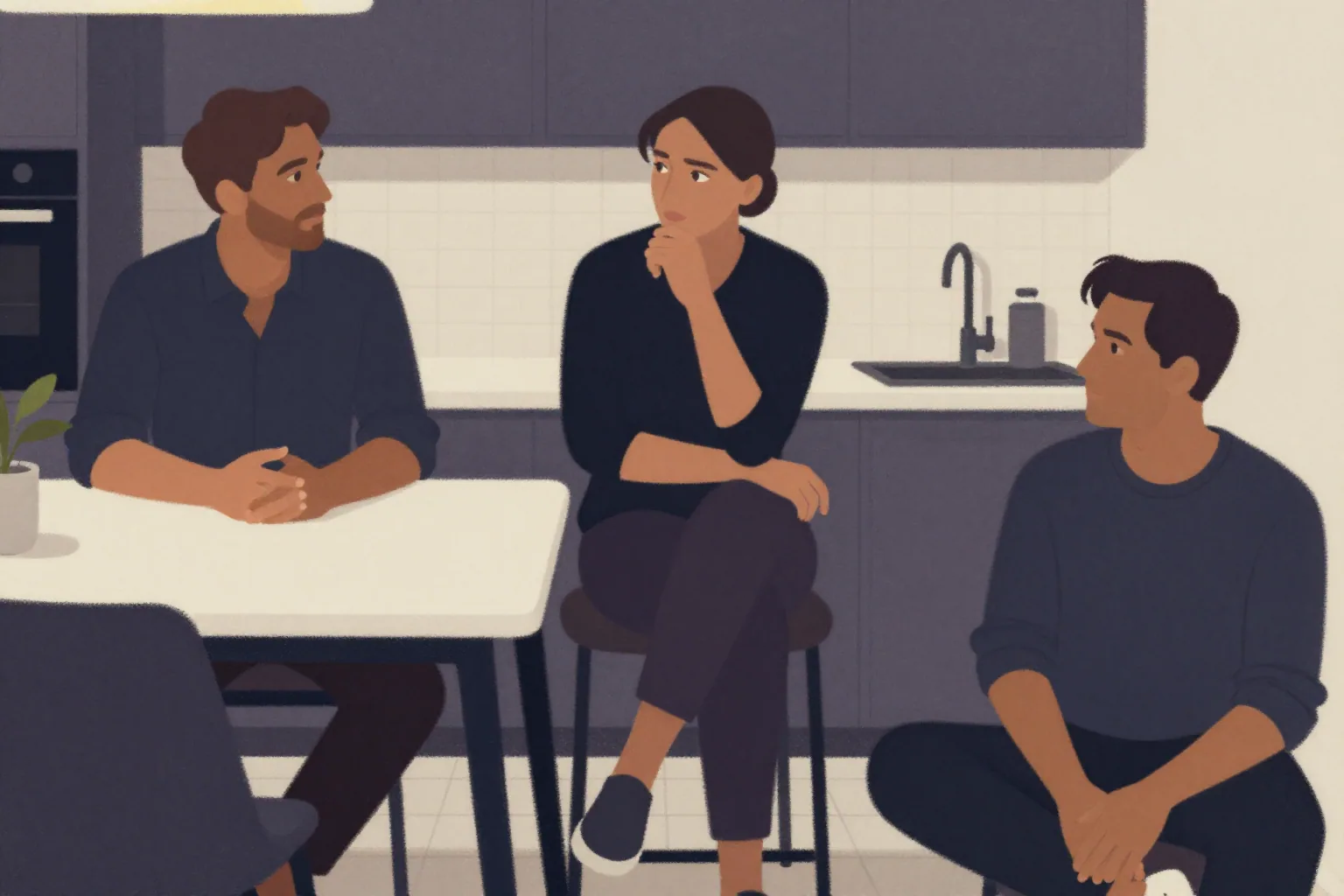
Preferences and repeated patterns become easier to interpret when you can name the principles underneath them. Continue with Relationship Values: What Matters Most to You? to separate core values from preferences and turn abstract priorities into observable behavior.